You’ve likely heard one of the most recognized sustainable design definitions from Our Common Future, a report from the World Commission on Environment and Development: Sustainable design is “meeting the needs of the present without compromising the ability of future generations to meet their needs.”
As design and construction professionals, a tremendous opportunity exists to take the lead in solving many of the world’s most pressing environmental problems, including climate change, energy, water and land use, air pollution, waste management, and deforestation. The Environmental Protection Agency has estimated that building renovation and demolition of debris comprises 25-30% of all waste produced in the nation each year.
To refocus these challenges into substantial business opportunities, we must first lay significant groundwork:
- Educate your team. Building rating systems such as Leadership in Energy and Environmental Design (LEED®) have been active for 15 years and are universally accepted or required. Use your firm’s communication tools to share information.
- Consider reducing carbon emissions. Multiple online sources can help a firm calculate its carbon emissions; reinforcing its message of commitment to sustainability.
- Adopt the Architecture 2030 Challenge; a global initiative aimed at reducing fossil fuel use through sustainable building design strategies and designing buildings that meet the 50% reduction target.
- Embrace building information modeling (BIM). BIM helps designers troubleshoot issues and fine tune building systems to reduce energy consumption and address conflicts.
- Embrace the materials loop. Designing for deconstruction is an emerging concept that involves the act of recovering building materials once a facility has ended its lifecycle.
- Develop an environmental business strategy.
By designing high-performance buildings that use significantly less energy than traditional facilities, the client saves money and often improves worker productivity. Let’s do what we do best; just in a greener, more sustainable manner.
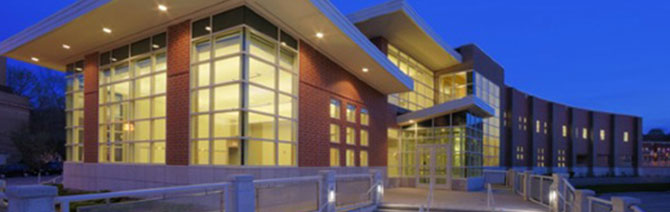
Even mid-sized, municipal facilities such as the Moline Police Headquarters can be designed to reach sustainable specifications. Designed to meet LEED Certification, more than 2,700 tons (or 99%) of construction waste was diverted from landfills and recycled/reused. Dewberry estimates a 22% energy savings over code regulations; a $26,000 annual savings.