Out of Sight, Out of Mind
Aging infrastructure is a common theme and a pressing problem. The American Society of Civil Engineers’ (ASCE) latest assessment on our nation’s infrastructure estimates a $3.6 trillion investment is needed to maintain a state of good repair. Aging subsurface infrastructure, such as waterlines, sewers, gas, and power are less visible then roads and bridges and therefore sometimes even more neglected. These systems are 60 to 70 years old, well past their original service lives, and often require daily repairs with either zero or minimal annual replacement plans. A sophisticated analysis isn’t needed to see that this is a costly maintenance issue when, for example, one southern city receives more than 50 work orders per day for waterline breaks. Communities need to be aware of and create prioritized capital reinvestment to construct long-term, robust infrastructure systems.
Making Repairs a Public Priority
The solution to maintaining the health of subsurface infrastructures lies with the people and their public officials. As engineers, we can help educate the public on the status of their systems, the economic impacts of inaction, and the positive benefit-cost ratio of replacement.
We are currently assisting communities such as the City of Lake Wales, Florida, with addressing its aging subsurface infrastructure through a phased approach that includes prioritized repair and regular public outreach. According to City of Lake Wales Utility Director Sarah Kirkland, the city continually educates its citizens by including descriptions of current and future capital improvements in its annual state of the city address, holding public workshops on large utility projects, and maintaining an active community outreach program.
We’re assisting the City of Lake Wales with priority repairs of pipe systems via trenchless technology. This replaces pipelines using underground directional drilling where feasible, enabling critical thoroughfares and economic arteries to remain open in and around the city. In total, the City of Lake Wales will spend $52,339 for engineering services related to replacing aged waterlines in three areas.
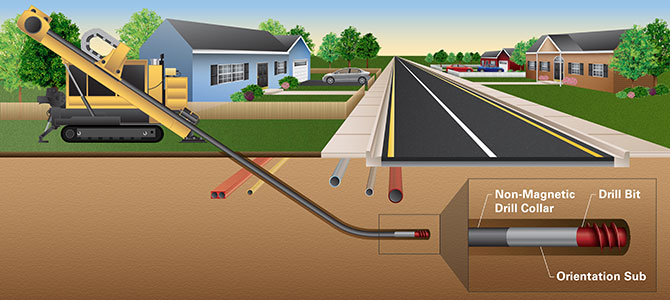 Directional drilling is rapidly becoming the preferred trenchless technology due to its ability to minimize construction inconvenience and damage, while avoiding utility conflicts.
The positive results of the City of Lake Wales’s public outreach and education on these critical infrastructure issues is evidenced by the city earmarking $200,000 in the current year’s capital improvements budget for these upgrades with an additional $800,000 scheduled for next year. In the future, we will work with them to determine the consequence and risk of failures within the system to help prioritize future repairs and replacement. Eventually this will enable the City of Lake Wales to execute a comprehensive asset management plan that moves past just quick fixes, continues to educate public officials and customers about the status of the system, and helps develop more robust and redundant systems in the future.
Taking on a Big Problem One Step at a Time
The engineering profession has always enjoyed a unique responsibility to its communities. Through continued education, collaboration, and creative thinking, engineers can empower constituencies to drive political will towards a capital reinvestment in infrastructure. For this reinvestment to be effective, it must focus on the future by using a more robust 50-100 year service life as the standard along with redundancy.
Engineers can also integrate design expansion and adaption needs at the onset. For instance, given the massive disruption, cost, and complexity of repairing subsurface infrastructure networks, advancements in less invasive techniques, such as trenchless repair using underground directional drilling with improved piping such as high-density polyethylene (HDPE) can help communities meet this long-term goal, while allowing transportation networks to remain open and current systems to continue to operate until they are decommissioned. Through collaborative efforts, communities can see a path forward to upgrading their subsurface infrastructure.