Dewberry has completed the National Hydrography Requirements and Benefits Study (HRBS) for the U.S. Geological Survey (USGS).
The firm conducted the study—sponsored by USGS and the U.S. Department of Agriculture’s Natural Resources Conservation Service—to establish a baseline understanding of national business uses, needs, and associated benefits for national hydrography data; and to inform the design of an enhanced future program that balances requirements, benefits, and costs.
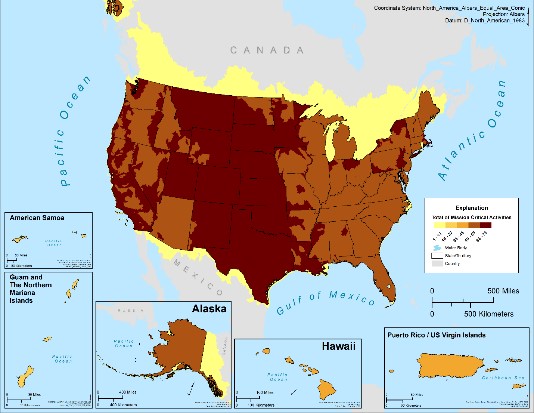
Dewberry collected more than 400 responses from federal agencies; commissions; non-profits; private and commercial entities; and local, state, and tribal governments from across the 50 states, Washington, D.C., and American Samoa.
Participants were asked to provide detailed information about the hydrography data required to accomplish their missions, including positional accuracy, stream density, smallest contributing watershed, smallest mapped body of water, update frequency, post-event updates, and level of detail. They were also asked what analytical functions and integration levels are required between hydrography data and other datasets. Dewberry collected responses regarding hydrography data access methods, including required data types or formats, geographic extents, data or service access methods, required elevation-hydrography data integration, and the impact of hydrography data errors. Study respondents reported budgets associated with annual programs supported by hydrography data and what future annual benefits they anticipate from an enhanced data program.
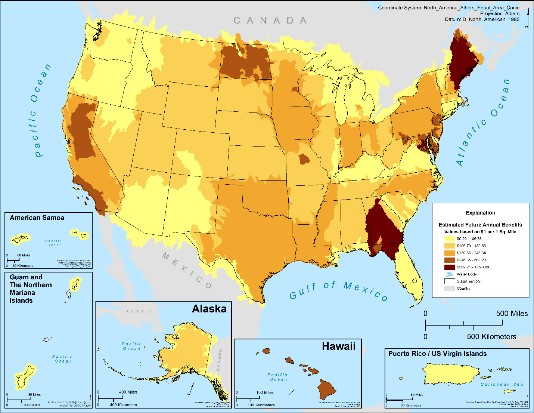
“Hydrographic data is integral to a variety of mission-critical activities performed throughout the U.S.,” said Dewberry Associate and Project Manager Sue Hoegberg, GISP, CFM. “Our report gives USGS a far greater understanding of the requirements and benefits associated with potential enhancements to a national hydrographic data program, one that—if all reported requirements were met—would help users realize an estimated $602.5 million in annual program benefits.”
Based on Dewberry’s results, the top business uses of hydrographic data are to manage river and stream flow, riverine and stream ecosystems, water resources, flood risks, and wildlife and habitat, as well as track water quality—six uses that account for $545 million of the estimated future annual benefits. The top requirements for integration with other datasets are elevation, stream flow, wetlands, soils, and land cover.