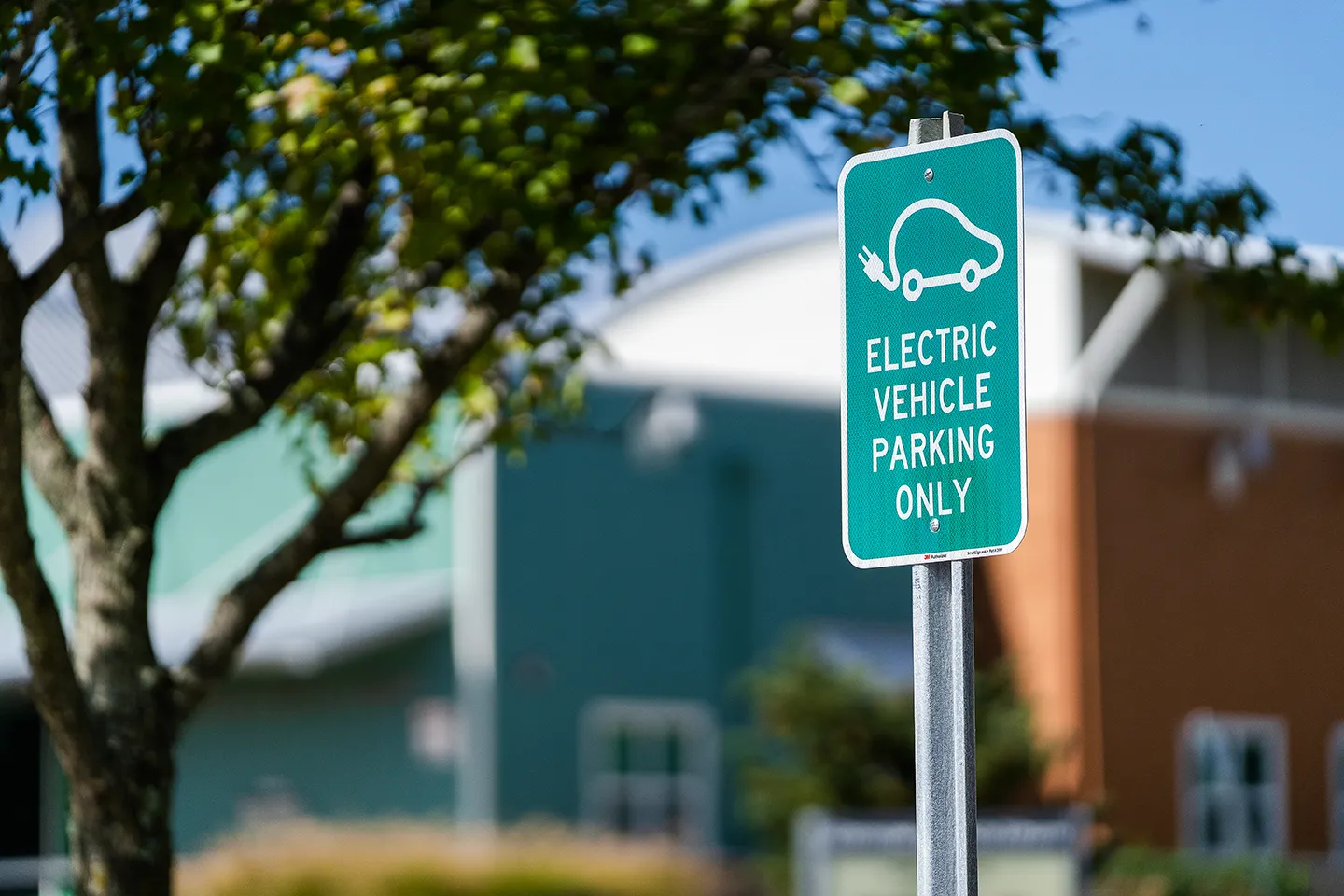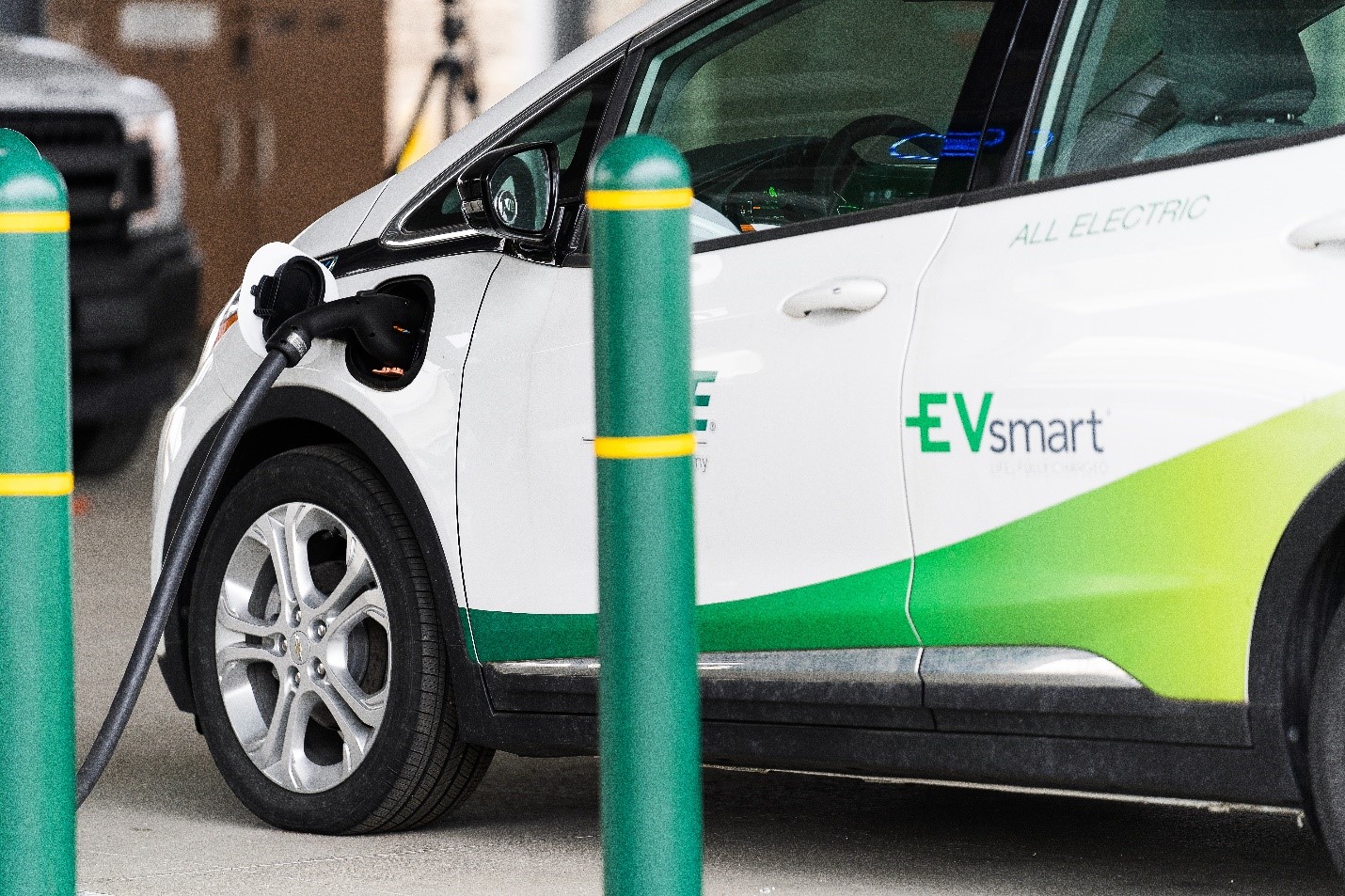
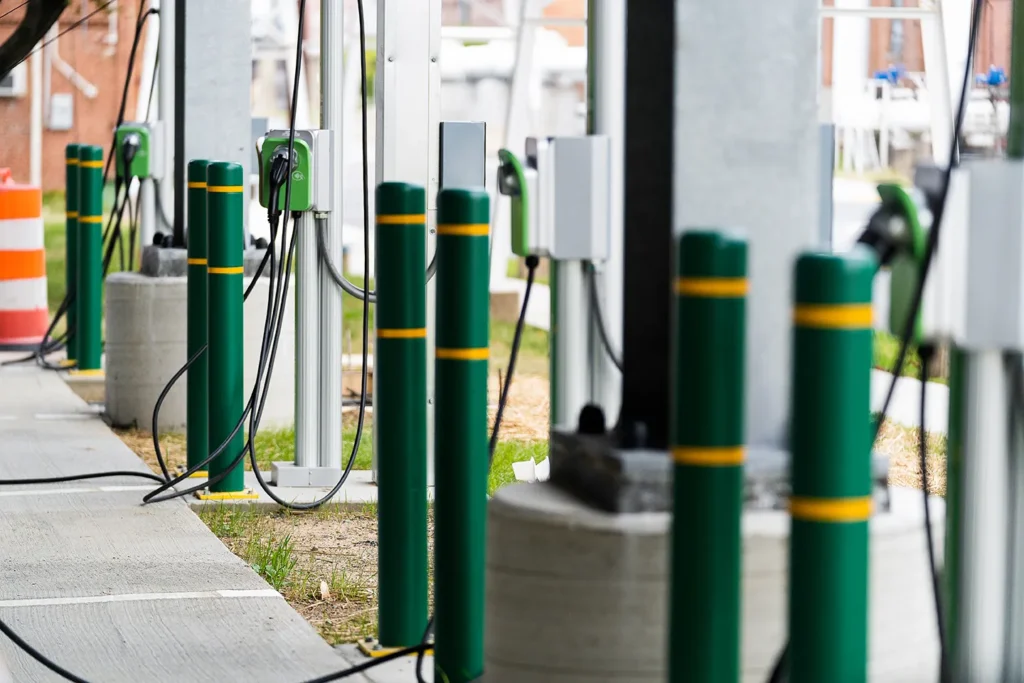
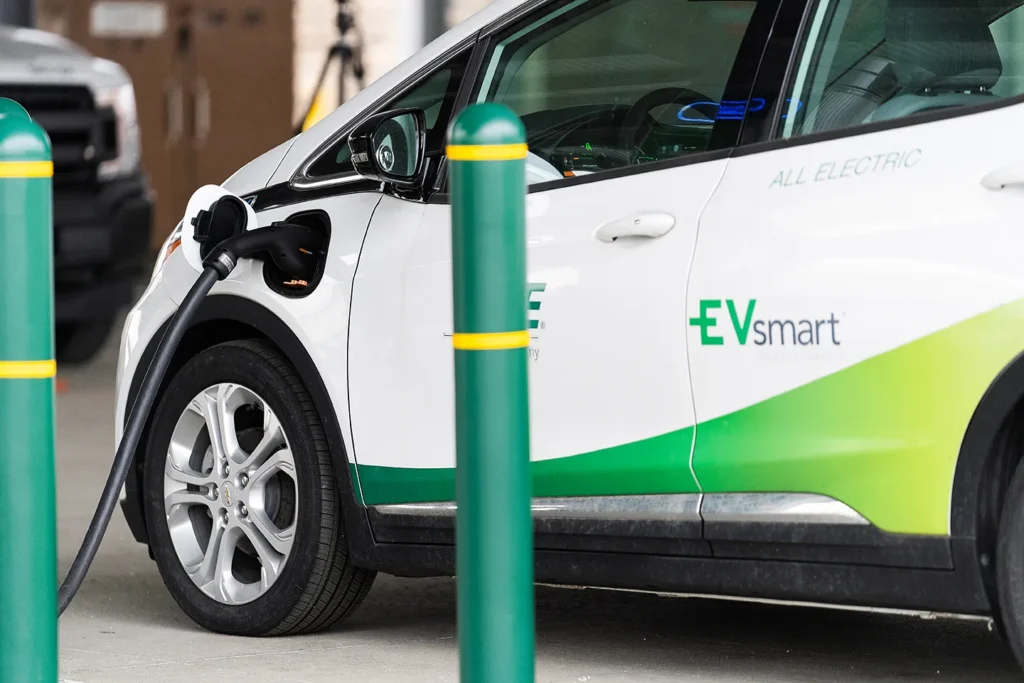
Many of our clients are looking for ways to decarbonize their facilities and fleets in sustainable and environmentally friendly ways. We were able to help the Baltimore Gas and Electric Company (BGE) with this goal at their Spring Gardens facility in Baltimore, Maryland. The project was a design-build opportunity for electric vehicle (EV) charging stations, microgrid, solar canopy, ground-based array, battery energy storage system (BESS), and a parking lot expansion.
The result was an effective utilization of clean renewable energy, including:
- 49 EV chargers for a total of 82 stalls
- 460-kW direct current solar carport
- Upgrading the existing ground based solar array to a 180 kW DC system
- 500-kilowatt hours (kWh) BESS expandable to 1000 kWh
- Microgrid interconnected solar and battery storage with the grid to offset loads for fleet EV and facility buildings on campus
Project Progression
We undertook many action items to achieve BGE’s goals for the facility. Each step played a role in maximizing the efficiency of the system. These action items included coordinating with the EV fleet, building automation systems, and installing:
- ChargePoint EV charging stations
- An elevated steel structure to house solar panels while maintaining the facility’s parking capabilities underneath
- Solar panels to allow for the lowest cost and most efficient way to charge the fleet
- New inverters which provide more efficiency and redundancy than the previous ground-based solar array
- BESS which allows for charging during no power and higher demand hours at a lower cost and can be expanded for future growth
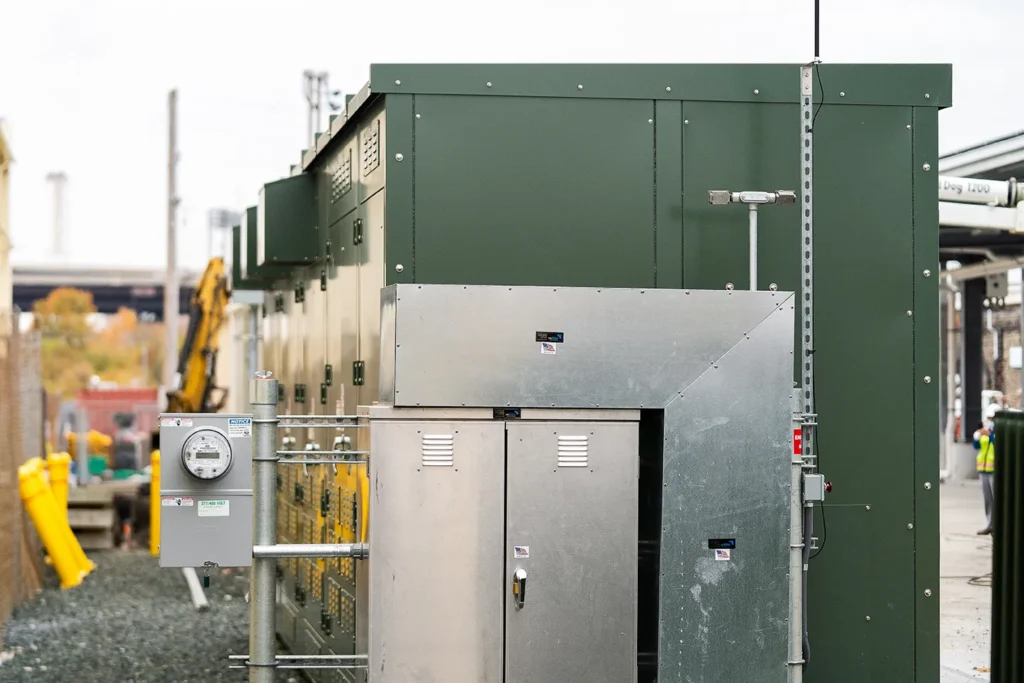
- Multifunctional automated switchgear and microgrid
As our society requires more and more resources, implementing renewable options can help alleviate the strain while promoting environmental benefits.”
Dave Revette, David Taylor, and Dan Southwick
Economic Analysis
We retained an environmental consultant to prepare an economic analysis of this facility. The analysis compared the cost of electricity from a microgrid versus utility, which was then compared against the utility levelized cost of electricity. This analysis showed that the microgrid provides a moderate return on investment which has the potential to improve by increasing the client’s fleet and opening the charging to other commercial fleets.
Benefits
Along with economic benefits, this project also puts less stress on the grid. The solar power generated in this system is equivalent to:
The solar canopy also provides added benefits to vehicles and drivers such as coverage during adverse weather conditions including rain or snow. This also allows for reduced operations and maintenance costs due to a decrease in plowing and salting operations, as well as an added safety feature as it reduces slips, trips, and falls.
Impact
Projects like the Spring Gardens facility are examples of how energy changes can have positive impacts on our communities and environment. Using solar power and an electric fleet can reduce greenhouse gas emissions and some types of air pollution, diversify energy supply, and reduce dependence on imported fuels. As our society requires more and more resources, implementing renewable options can help alleviate the strain while promoting environmental benefits.
About the Authors

Dave Revette

David Taylor