
The design-build project delivery method has been used in the U.S. for almost 30 years, but there is still some confusion about what the term really means. The simple explanation is that under a design-build contract, a client hires a design-builder team
that will deliver a project through design and construction. In the design-bid-build format, a client hires a team of independent designers to complete the construction plans, then advertises the construction of the project for competitive bid by
interested contractors.
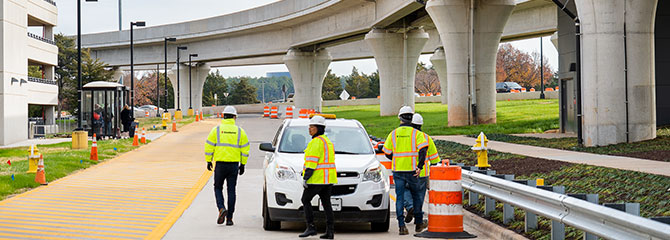
The Dulles Corridor Metrorail project is an example of a design-build project that we have been working on since 2013. The corridor is expected to be open to the public in 2021.
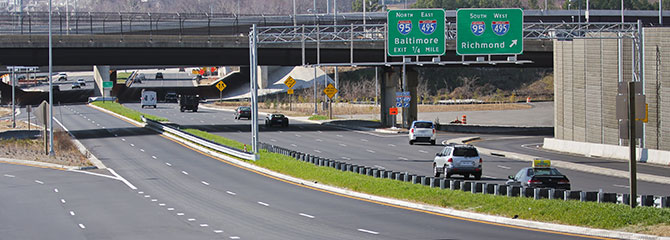
The I-95/Telegraph Road interchange project was completed through the traditional design-bid-build process.
Why chose the design-build delivery method?
The most often recognized benefit is time savings. Projects delivered under the design-build method can expect reduction in total design and construction durations by 25 to 50 percent when compared
to similar design-bid-build projects. One of the biggest factors in time savings is the ability for the design-builder to overlap design and construction processes that would normally be completed in stages. An example of the overlapping process occurs
in right-of-way acquisition and utility coordination. For a design-bid-build project, the client needs to complete design, acquire land from property owners, and complete utility relocations before the builder can begin any work. In design-build,
the designer and builder can coordinate right-of-way and utilities while the design is still being developed and utility relocations can occur during the actual construction period.
What are some additional benefits to design-build?
The design-build team is typically selected through a competitive bid process that encourages teams to be innovative and to find cost savings within specific technical requirements.
Since the designer and builder are teamed throughout the entire process, there is also level of communication that does not exist in the design-bid-build method. The builder can review the designer’s construction plans during development to
find constructability issues or find efficiencies that might not be otherwise evident.
What are some risks of design-build?
The primary risk of design-build is that the design-builder becomes wholly responsible to design and construct the project within local, state, and federal requirements. The client will perform preliminary
investigations to reduce some of that risk, but the expectation is once the contract is awarded, the design-builder “owns it all.” On the client’s side of things, there is sometimes the perception that a design-build project may
not actually be more cost effective due to the lack of competitive bidding on a defined product.
Not every project fits the design-build mold, but it is a useful tool that is being used across the country. The success of this method has even created new forms of design-build, such as progressive design-build. Who knows where the industry will take
us next.
About the Author