Have you ever wondered about the person or technology responsible for gathering weather data? Does that person sleep, or does the technology turn off or restart? Okay, so maybe you haven’t really ever wondered these things, I hadn’t. But when
I started working on a telecommunications project for the Blue Hill Weather Observatory just south of Boston, I realized that weather data collection is a massive undertaking and requires serious dedication.
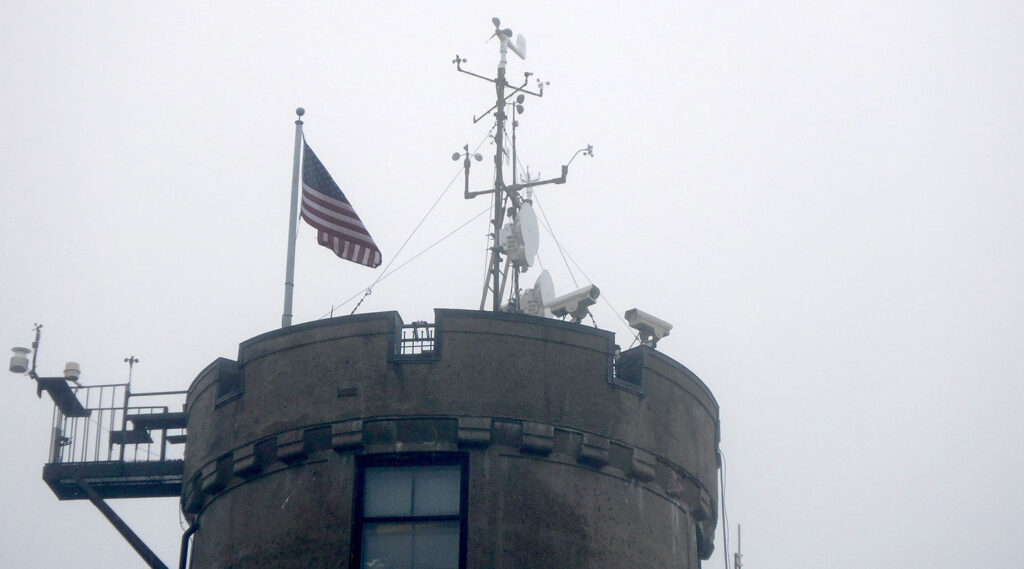
The existing tower at the Blue Hill Weather Observatory has been collecting data continuously since 1885.
The Blue Hill Weather Observatory was founded in 1885 as private scientific center for the study and measurement of the atmosphere. Since then, it has been continuously collecting weather observation data. That’s nearly 135 years of non-stop data
collection.
Finding a Way to Continue Collecting Data
In 2017, the observatory began undergoing some critical renovations, including a roof and siding replacement, but needed to find a way to continue collecting data during this time. Our Boston-based team was hired to find a creative way to keep the data
collection operational while the renovations were completed. This resulted in building a secondary tower and adding the same type of equipment on the new tower. The two sets of equipment operated simultaneously for about two months to make sure that
data collection would continue on without a glitch, albeit the two towers were roughly sixty feet apart.
Building Up
First, we needed to find a spot to install the new tower and equipment. Soon after we began surveying the area, we came across an unmarked, six-foot-wide electrical ductbank. Thankfully, we were able to catch this early in the process and find an alternate
location. Once that was resolved, we moved into phase two, which included surveying the area for bedrock. Wouldn’t you know it, sure enough we hit bedrock one-foot below the ground after we began boring. This required us to rethink the tower
foundation, so we decided to build it up instead of drilling down.
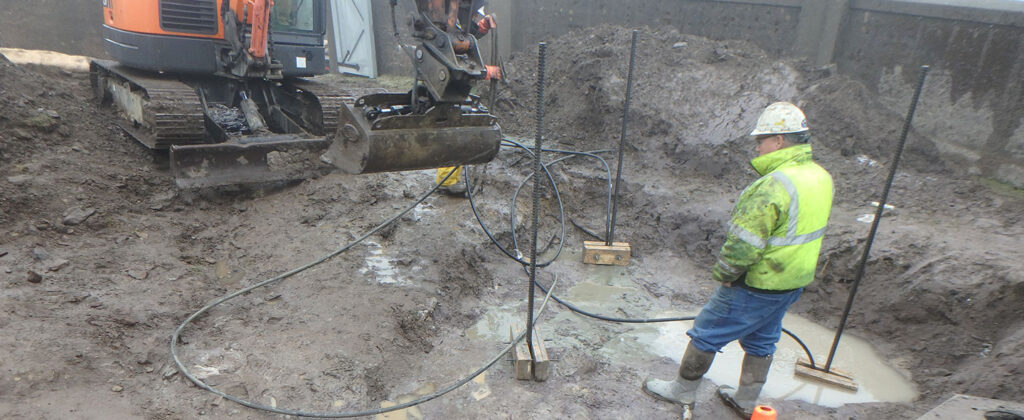
Instead of building into the ground, our team found a way to build the base of the new tower above ground, with the help of rock anchors, to support the second set of data collection equipment.
A Catch-All Solution
We designed a three-foot diameter concrete pier for each tower leg to anchor to that would extend five feet above the ground, and did so in a way that would support the tower and equipment on top of it. Our team re-surveyed the land and verified the height
of all the existing equipment that was on the old building so the second set of equipment would be a similar height, then we included an adjustable mount so the weather equipment elevation could be measured to the nearest few inches.
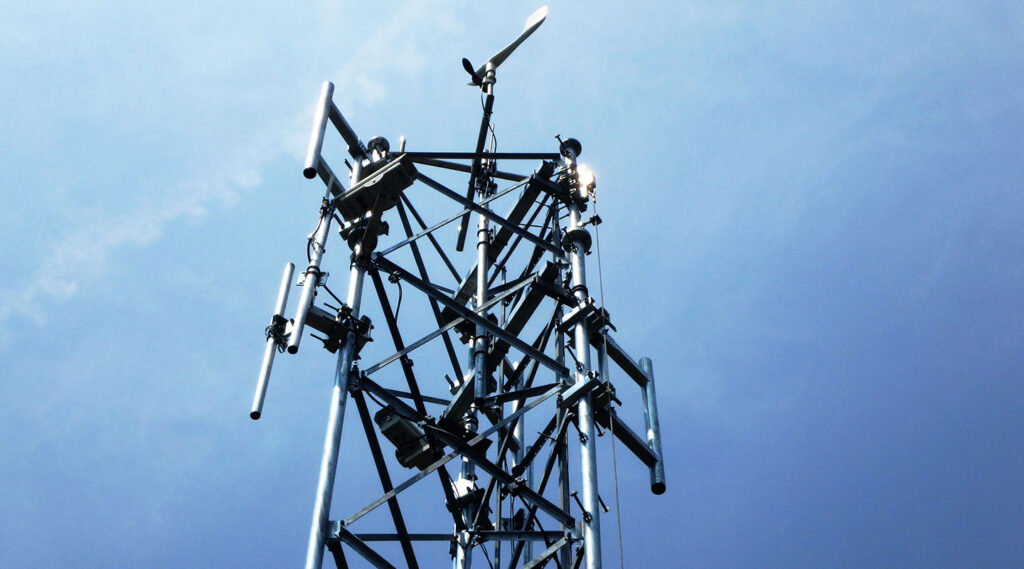
The new equipment ran simultaneously with the existing equipment so that data continued to be collected during renovations.
This story isn’t unusual in many ways. In this line of work, more often than not, you’re faced with unforeseen challenges that require a unique set of solutions. That’s what keeps this job exciting, and it’s these types of challenges
that I love overcoming on behalf of my clients.
About the Author