Content originally published in May 2014. Updated in August 2022.
Student enrollment in universities is projected to remain relatively flat in years to come, according to a May 2020 report by the Institute of Education
Sciences’ National Center for Education Statistics. Whereas in the past, institutions of higher learning needed more space to accommodate growing enrollment, they now find themselves facing flat enrollment while still needing updated, fresh, technology-rich
space for changing programs. Such change can pose considerable financial challenges to universities that need to physically support current and future program needs. The answer may not be new construction.
Becoming Wiser Stewards of Space and Improving Sustainable Return on Investment
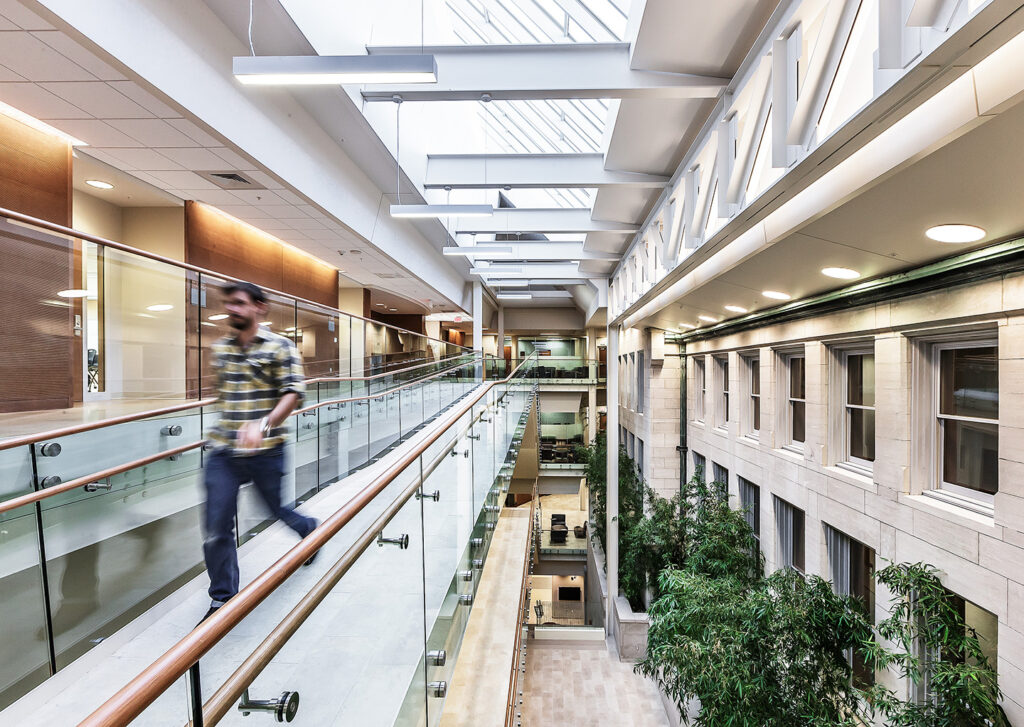
As some campuses invest in new buildings specifically designed to support the latest teaching requirements, older buildings fall into disrepair, and the valuable space they provide is either underutilized or is operated inefficiently.
A good business case for renovating an older building instead of constructing a new one involves understanding the building’s “real” replacement cost. Preserving the natural resources required to build new facilities is crucial, and by considering
an existing structure’s embodied energy, we begin to understand this real cost. Embodied energy is the sum of the energy needed to extract raw materials, manufacture, transport, install, maintain, and dispose of construction materials and products.
Preserving this embodied energy has the potential to yield a higher sustainable return on investment than building new, while saving the university valuable money in operating costs. Why spend more money powering additional square feet of new
space when you can potentially spend less by utilizing current space more intelligently?
Preservation and Sustainability
Preservation and reuse go hand-in-hand with sustainability, and both themes now have an additional emphasis in the latest U.S. Green Building Council (USGBC) LEED® Versions 4.0 and 4.1. By using existing buildings more wisely, creating flexible
space, and incorporating green features, universities can provide students with an enhanced learning experience and modern amenities.
Renovating existing buildings is a win-win. It can accommodate the need for different types of contemporary academic space, preserve embodied carbon, and showcase the university’s unique character. ”
Jennifer Betancourt
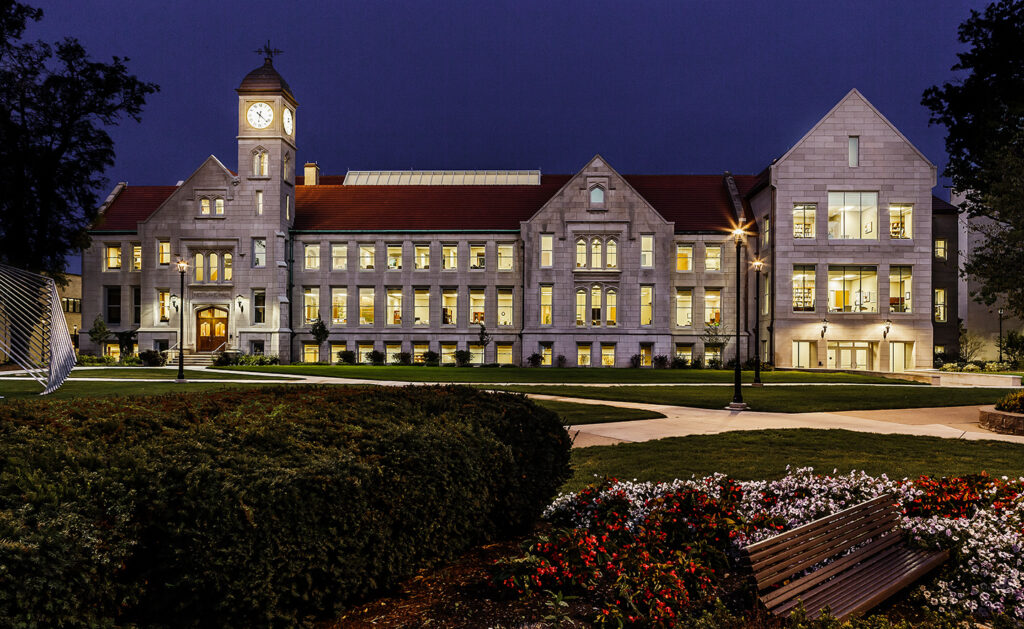
We always get excited when presented with a project that requires both the artful preservation of historical buildings and important sustainability goals. In the case of Bradley University’s Westlake Hall, we were able to preserve the hall as the
heart of the universities’ culture, while also capitalizing on a number of sustainable strategies. This beautiful facility is LEED Gold certified and is recognized by American School and University for outstanding design in adaptive reuse.
Instead of leveling a building, consider restoring it. It’s a carbon-friendly and environmentally responsible solution that architects, engineers, and institutions of higher learning continue to embrace.
About the Author