Skip to Content

Building Blocks to Mitigation

Every year, we try to think of innovative ideas to generate interest at Dewberry’s exhibit at the Association of State Floodplain Managers' annual conference. This year, the inspiration for one of our biggest conversational pieces came from my godsons’ playroom—using Legos to build a model of a…

By Deborah Mills

Deborah Mills

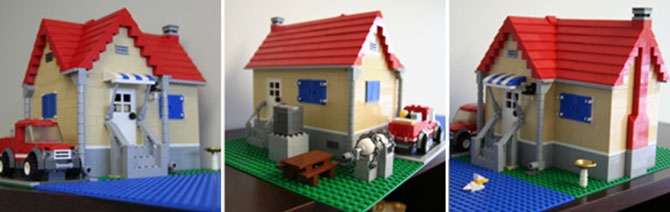
Every year, we try to think of innovative ideas to generate interest at Dewberry’s exhibit at the Association of State Floodplain Managers’ annual conference. This year, the inspiration for one of our biggest conversational pieces came from my godsons’ playroom—using Legos to build a model of a mitigated home to demonstrate proper hazard mitigation techniques.
Mill-LegoHouses_Together

Complete with hurricane shutters, emergency preparedness kits, and an elevated house, our model has influenced many technical discussions, and even fueled some disagreements. As the popularity of the model has increased, we’ve modified it—with a tornado safe room, for example—and taken it to other conferences. We’ve also altered parts of the model, and quizzed people on which features were wrong.

I was recently on a panel discussing risk communication, and took the model with me as an aid. During the question and answer period, it was especially helpful when explaining hazards and flooding. I was even asked to use the model to speak on another panel; one that I was not originally a part of.

Since we’ve taken this model to multiple conferences, I’m not sure if it will be sent out anymore. However, I think the idea behind its creation—using basic children’s toys to create basic demonstration models—can be used across other disciplines, especially for architectural projects such as schools and libraries.

About the Author

Deborah Mills

Deborah Mills

Related Insights

Working in groups, participants developed creative prototypes, including collages, games, plays, parks, fairs, and other engagement tools, to inspire community action.

September 24, 2026

This year, National Preparedness Month focuses on getting back to the essentials of preparedness, starting with understanding community risk. For resilience planners, knowing the risk is only the beginning. We also need to communicate risk in ways that are clear, relevant, and actionable for…

Blog

Following an urban heat assessment and resilience planning project, we supported Hillsborough County’s “Classroom to Canopy” event, where we conducted a classroom demo of coastal flooding and a tree planting activity onsite.

September 9, 2026

Florida’s recent experience dealing with climate challenges has led to a greater understanding of what action is needed to build towards a more resilient future. These lessons learned help to inform Florida’s resilience playbook and have spurred innovation to tackle some of the state’s most…

Blog

Dimensions®

Our annual review and corporate social responsibility report, in one place.