It’s good that the National Health Care Facilities and Engineering week is upon us. It allows employees in the patient-care industry to be well recognized, and allows industry thought leaders to hone in on the factors driving the industry today. After 40 years of experience with facility assessments, utility master plans, energy studies, and MEP designs for hospitals throughout the U.S., I’ve recognized a particular set of goals that make for high-performing hospitals: make patients comfortable, cure patients, do no harm, and operate in the black.
How Can Health Care Engineers Help Our Hospitals Achieve These Important Goals?
Engineering for health care facilities is very different from business or residential buildings. The materials and technology used in hospitals and wellness centers must be considered on a deeper level. HVAC systems, for example, need to be recognized as more than just combinations of pipes, coils, and wires. They must serve a population that is highly susceptible to infections and sensitive to noise, temperature, humidity, and breezes.
Like a heart, hospital HVAC systems are an integral part of a living system, constantly at work, usually without much conscious recognition. The consideration as to what it must do, however, is a highly conscious decision. High performing hospital HVAC systems must do five things:
- Mitigate airborne infections and maintain comfort
- Be reliable
- Require low maintenance
- Be energy efficient
- Be sustainable
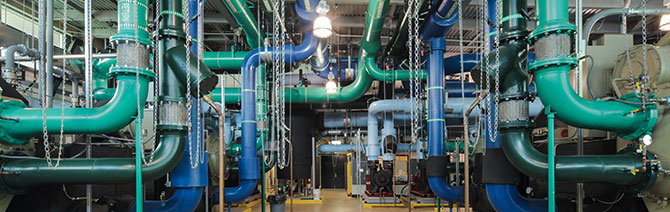
“Like a heart, hospital HVAC systems are an integral part of a living system.”
To Me, The Priorities Are Clearly In That Order.
1) Infection control and maintaining comfort both serve the same purpose – positively affecting patient outcome. About five percent of hospital-acquired infections (HAI) are caused by airborne transit of microorganisms. Although a small percentage, that can actually represent a major cost. Hospital HVAC systems reduce HAI through filtration, dilution with “clean air,” movement of air from clean to less clean areas, air flow patterns, and UV irradiation. At the same time HVAC systems are reducing HAI, they are maintaining patient comfort – a recognized factor in patient outcome.
2) Reliability is a necessity. Going back to my comparison of hospital HVAC systems to the human heart, everyone expects their heart to be reliable – and it’s simply not enough to notice the problem just before the tipping point. Many hospitals have emergency power systems to mitigate electrical outages, but few have redundant HVAC systems. The loss of such a system could actually do harm to a patient, affecting comfort and possible HAI transmission, all while causing a significant loss of revenue.
3) Something as simple as low maintenance cannot be overstated. At around $5 per square-foot, annual maintenance is a large part of an operational budget. Maintenance is directly proportional to system complexity, and complexity can also severely compromise reliability. Hospital HVAC engineers should strive to keep things simple to help hospitals run in the black.
4) Energy efficiency must be carefully considered. A poorly performing HVAC system can have an adverse effect on maintenance and infection control. For example, raising chilled water supply temperature will result in higher humidity in the hospital. Reducing air flow in unoccupied operating rooms can cause a reversal of pressurization and “dirty” air could enter the operating room. The balance point between energy efficiency and the other key elements is important to achieving energy efficiency while maintaining system effectiveness.
5) Sustainable systems are beneficial to both the environment and to our children. They can also have a positive effect on patient and staff morale. The engineer’s challenge is usually to balance the cost against other features competing for tight budgets.
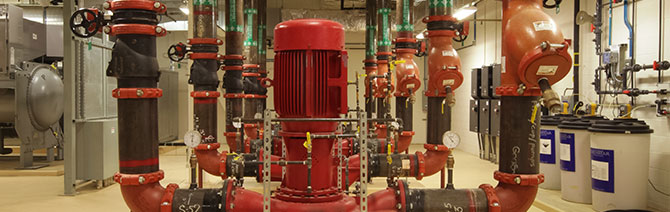
“Sustainable systems are beneficial to both the environment and to our children.”
These five considerations, mitigating airborne infections and maintaining comfort, reliability, low maintenance, energy efficiency, and sustainability, are the most important factors health care HVAC engineers must consider to do their part of the Hippocratic Oath. The correct combination and interaction of these variables, in relation to the unique environment of each hospital, are what makes for a high-performing facility – the purpose of which was, and always will be, patient outcome.
About the Author