Homestake Pipeline Rehabilitation
Pipeline Rehabilitation within the Remote Mountainous Areas of Colorado
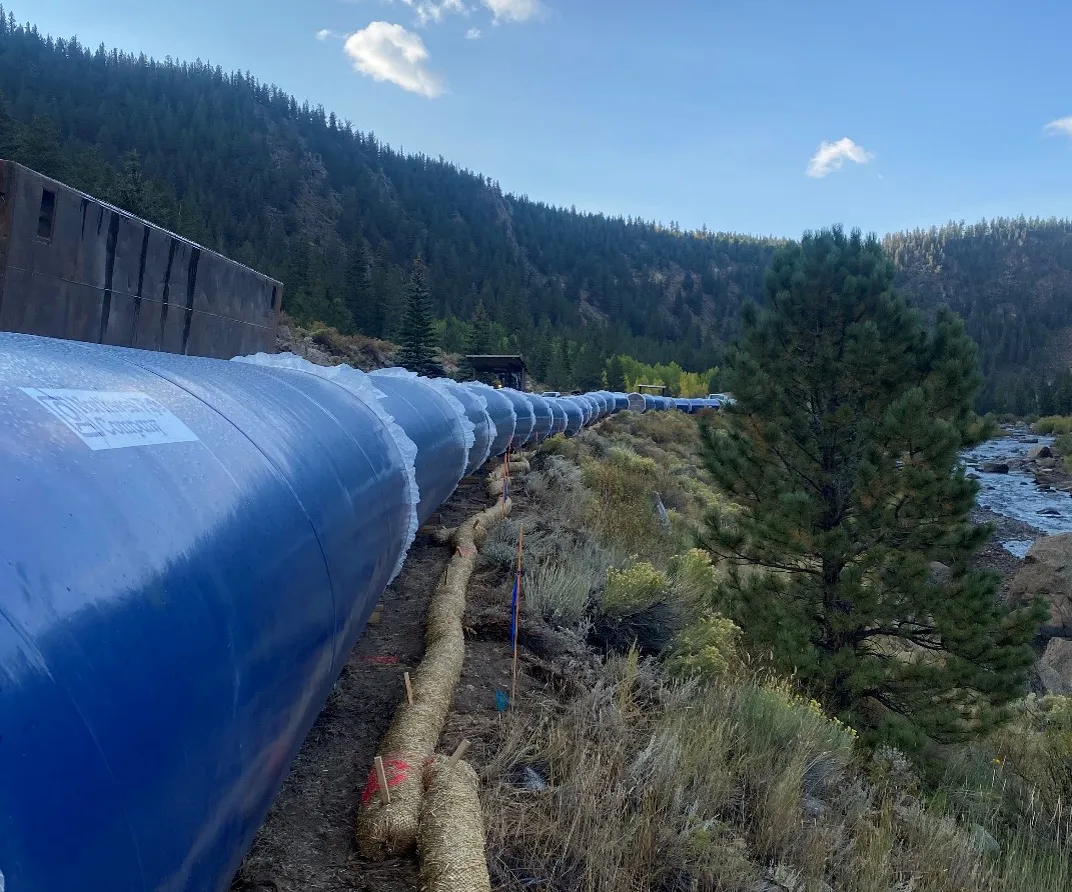
The 66-inch diameter, 56-mile-long pipeline delivers 118 million gallons of water per day (MGD), providing roughly 70% of the raw water for the cities of Aurora and Colorado Springs, Colorado.
- Client
- Colorado Springs Utilities
- Owner
- The Homestake Project, Colorado Springs Utilities, City of Aurora
- Location
- Buena Vista, CO
- Services
- Engineering
- Markets
- Water
- Cost
- $30 Million
- Completed
- 2025
- Region
- West
The Homestake Pipeline is a trans-mountain raw water delivery pipeline located in the high mountains of Colorado. The 66-inch diameter, 56-mile long, prestressed concrete non-cylinder and welded steel pipeline was built in the 1960s and delivers 118 million gallons of water per day (MGD) providing roughly 70% of the raw water for the cities of Aurora and Colorado Springs. We performed a pipeline and facility assessment, rehabilitation alternatives analysis, preliminary and final design for replacement services, and improvements to the water transmission system infrastructure. This evaluation led to a five-year phased condition assessment, resulting in the development of a 20-year capital improvement plan with goals of identifying and repairing imminent failure conditions to extend the service life of this critical infrastructure.
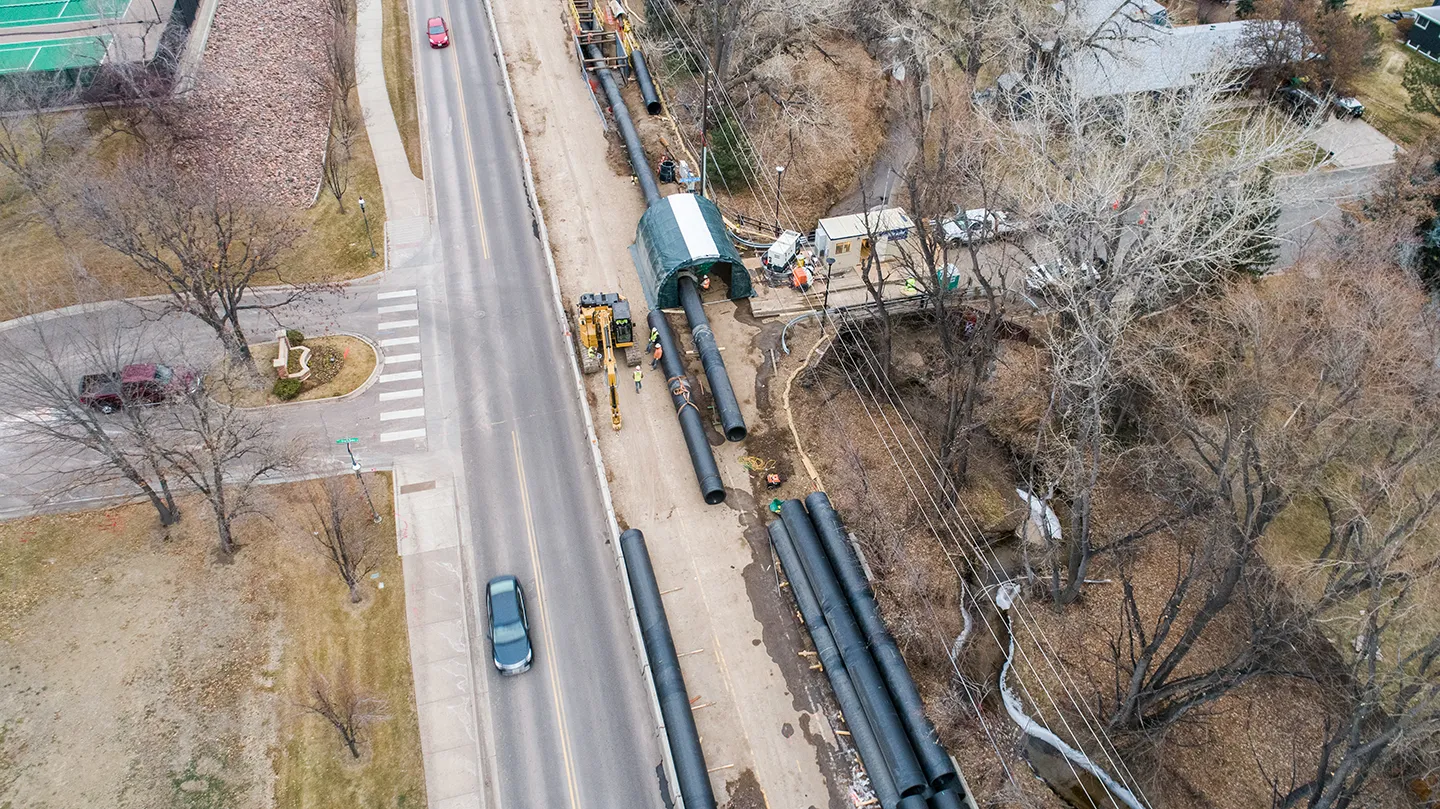
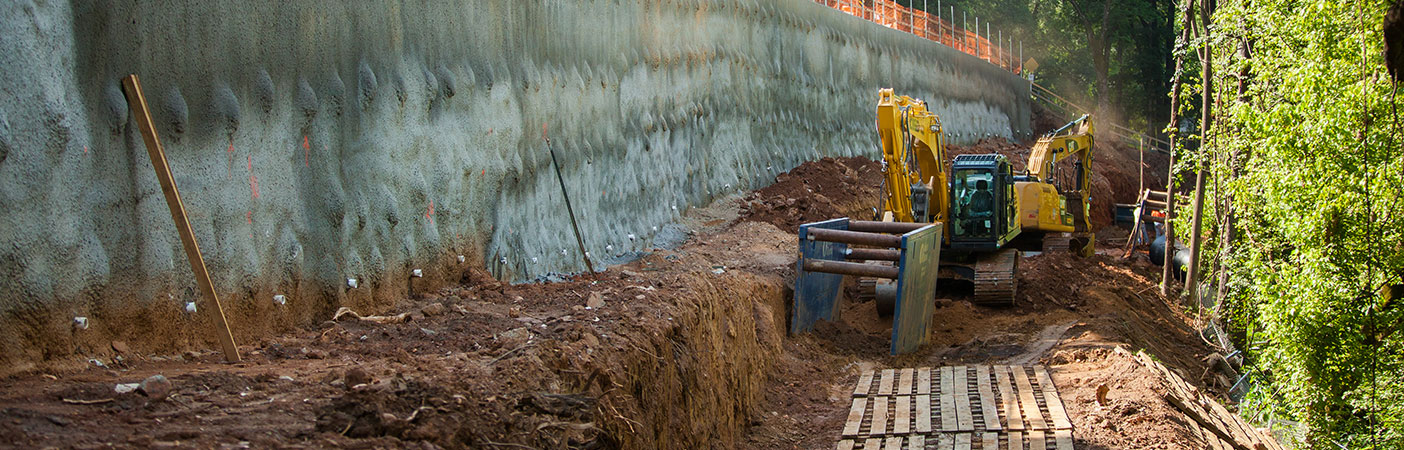
The initial prioritized work was phased over five years to include sliplining 1,229 linear feet (LF) of the 66-inch pre-stressed concrete non-cylinder pipeline with a 61.5-inch steel pipe and open-cut replacement of 14,600 LF of 66-inch steel waterline for the most distressed pipe sections. The initial sections were located on a narrow shelf road at the base of a steep 1,000-foot-high slope and the Arkansas River.
This prestressed concrete pipe is unique in that there is no steel cylinder and the end connections are made with a steel spigot ring with an O-ring into the bell-by-bell pipe ends. Connections to steel pipe were made with a machined steel bell which mates to the steel spigot rings. The machined bell underwent multiple refinements over the years.
Due to the reliance on this water supply, the pipeline work took place during a two-month shutdown window during the fall.
Several complex project challenges were overcome while working within the remote mountainous areas for short two-month durations each year, including:
- The lack of original project record drawings for locating the pipe and joints
- Easement verification and locating benchmarks
- A significant geotechnical effort due to the rocky conditions
- Multiple railroad permits for work within railroad right-of-way (ROW) and crossings
- 1041 permitting with Chaffee County
- Coordination and maintaining access with property owners
- Yearly improvements for maintaining the five-mile-long access road
- Environmental permitting requirements due to nesting ospreys along the pipeline
- Permitting for a temporary bridge across the Arkansas River
- Early winter weather considerations at this elevation
- Successful restoration given the late season and unique altitude environment
66-inch
diameter pipeline
56-mile
long pipeline
118 million
gallons of raw water
Related Projects
- Location
- Lakeland, FL
- Market
- Water
- Location
- New York, NY
- Market
- Water
- Location
- Plant City, FL
- Market
- Community Facilities
- Location
- Louisville, CO